
Beyond the Dashboard
Building ER Capability Where It Actually Matters

In the last post we talked about treating employment relations as a strategic discipline. The idea was simple. If you want to understand what is happening in an organisation, you need to watch the signals before the crisis. Absence patterns, repeat grievances, safety concerns and engagement scores. The same names appearing in exit interviews or complaints. A dashboard helps you see when an issue may be building beneath the surface.
But spotting the signal is only the first step. The question is what happens next.
Most workplace issues I have seen do not escalate because the policy was wrong. They escalate because someone avoided a conversation, mishandled one, or waited too long to address something that everyone could already see. This is where capability starts to matter, no matter what the policy says.
Many organisations respond to ER risk in the same way. They produce more guidance, longer policies and another flowchart explaining the process. Managers are brought together for training sessions that walk through each stage of the disciplinary or grievance procedure.
The intention is understandable. But the effect is often the opposite of what was desired.
If ER training becomes a slide deck explaining the policy clause by clause, you are not building capability. You are teaching managers that when things become uncomfortable, the safest move is escalation.
Policy knowledge has its place. But most ER situations are not solved by someone remembering the correct paragraph number. They are resolved by judgement, conversation and confidence.
Which is why good ER workshops look very different.
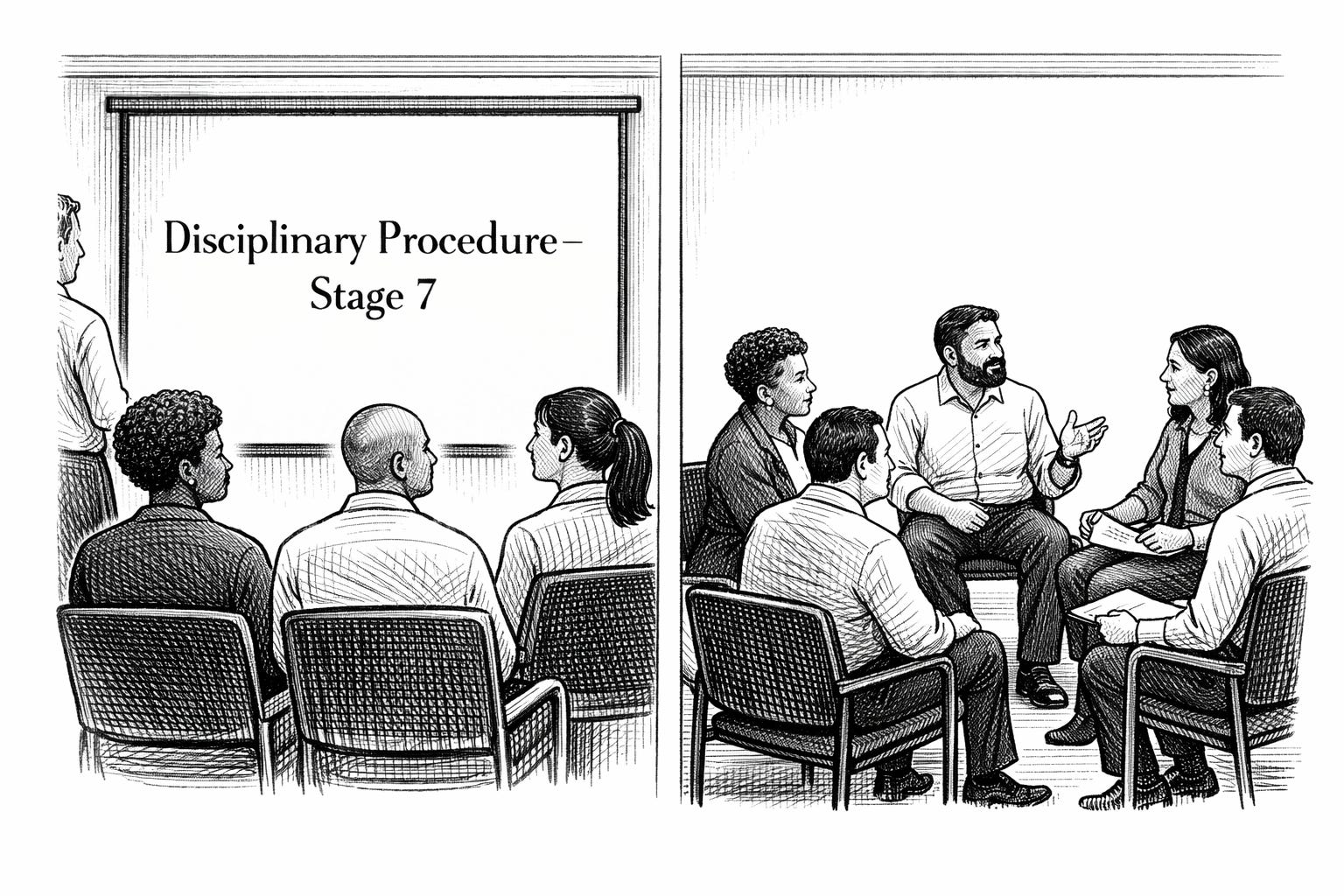
Instead of starting with the procedure, they could begin with the situations managers actually face. The messy conversations that do not fit neatly into a policy box. The moments where tone, timing and judgement matter more than technical knowledge.
When those workshops work well, three things usually happen.
Managers practise early conversations
Most ER problems begin as small behavioural patterns. Good workshops give managers space to practice how they address those things early. Not with accusations, but with simple, clear questions: “I’ve noticed a pattern here and I want to understand what’s going on.” When managers feel confident having those conversations, issues are far less likely to harden into formal grievances.Real scenarios replace policy lectures
The most useful training sessions look less like classrooms and more like case discussions. Managers work through realistic situations together: the team member pushing boundaries, the performance issue that has been tolerated for too long, the rep who challenges every decision in a meeting. These scenarios surface the judgement calls that policies cannot answer. They also remind managers that difficult conversations are normal in leadership, not something to fear.Managers learn how to work constructively with union representatives
For many managers, ER anxiety centres on the moment a union rep enters the room. In reality, most representatives are doing the same thing managers are doing: representing the people they are responsible for under pressure from different directions. Capability in this area means learning how to work across the table. Setting clear agendas. Understanding the union context and why people become reps. Listening properly before responding. Challenging the issue without damaging the relationship you will need the next time a problem appears.
There is another moment in these workshops that often matters more than any slide or scenario. At some point someone from HR or ER says something very simple to the room: “We’ve got your back.”
Managers often delay dealing with issues because they are worried about getting it wrong. They fear saying the wrong thing, triggering a complaint, or discovering that they are standing alone once things become difficult. When anxiety is present, the safest strategy is avoidance.
But when managers know they will be supported, they address issues earlier and they ask for advice sooner. They deal with problems while they are still manageable. Confidence reduces escalation.
Which brings us back to the dashboard.
The dashboard tells you where problems may be forming. It shows the patterns that suggest something is shifting in the organisation. Capability determines whether the signal leads to an early conversation or a formal dispute six months later.
In employment relations, very little truly arrives suddenly. Issues accumulate long before they erupt.
Strategic ER is not just about spotting risk. It is about building the judgement and confidence that allow organisations to address problems early, have better conversations, and resolve issues before they become something much harder to contain.
Hit subscribe for more human-centred takes on negotiation, conflict and collaboration, across the table. And if you want more insights from the world of ER, check out more information here and our other newsletters here